Trying to decide between a condo and a townhome in Langley? You are not alone. For many buyers, this choice comes down to more than square footage. It affects your budget, your monthly costs, your maintenance load, and how your home fits your day-to-day life. In Langley’s current market, understanding those tradeoffs can help you buy with more confidence. Let’s dive in.
Langley Price Gap Matters
In April 2026, Langley’s benchmark price was $812,000 for townhomes and $554,100 for apartments or condos, according to Fraser Valley Real Estate Board municipal stats. Average sold prices were $838,756 for townhomes and $539,142 for condos.
That is a meaningful difference. A typical townhome carried roughly a $258,000 premium over a typical condo at that point. For many buyers, that makes the decision just as much about affordability and monthly carrying costs as it is about extra bedrooms or outdoor space.
Inventory also gives useful context. Langley had 297 active townhouse listings and 490 active condo listings at month-end, while the broader Fraser Valley remained in buyer’s-market territory with an 11% sales-to-active-listings ratio.
That larger condo inventory can give you more choice if you want to compare buildings, layouts, and price points. At the same time, Fraser Valley townhomes were selling a bit faster on average in April 2026, with 32 days to sell versus 42 days for condos.
What a Condo Offers in Langley
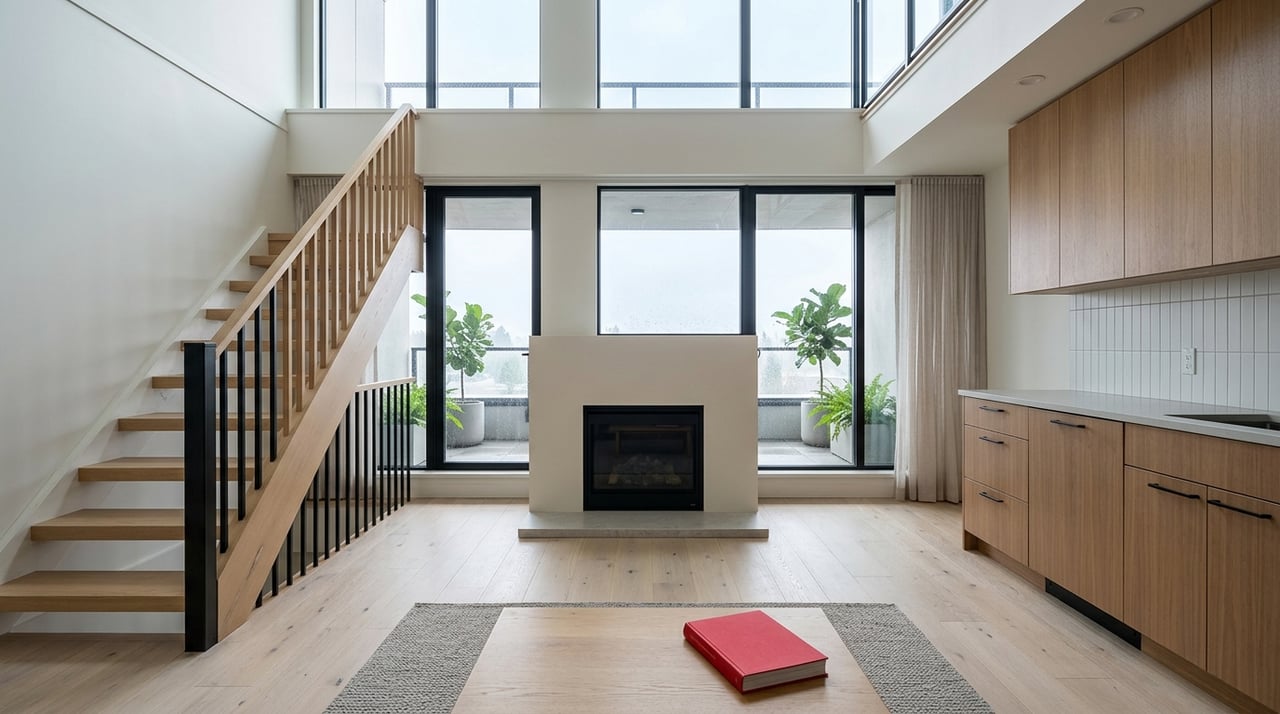
A condo often makes sense if you want a lower entry point into the Langley market. If staying closer to the lower end of today’s pricing matters, condos usually provide more options.
Condos can also work well if you value a lock-and-leave lifestyle. You may prefer a home with less day-to-day upkeep, shared building systems, and a more compact footprint that fits a busy schedule.
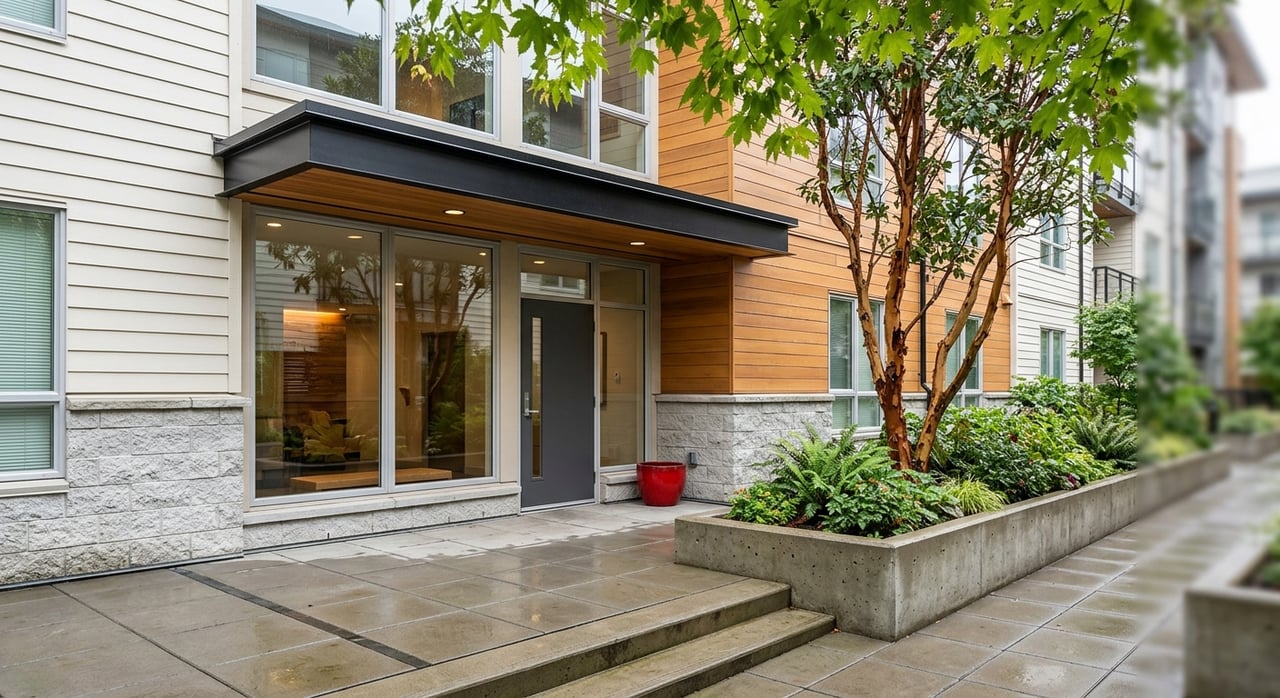
In Langley, condos are especially relevant around transit-oriented and mixed-use areas. The Surrey-Langley SkyTrain extension will run 16 kilometres from King George Station to 203 Street in Langley City Centre, which helps explain why downtown Langley condo projects continue to focus on future transit access and walkability.
That does not mean every condo is the same. Some projects lean more entry-level, while others are positioned for buyers who want newer finishes, mixed-use convenience, or a more elevated amenity package.
Condo Examples by Lifestyle
Langley offers a range of condo options depending on your budget and goals:
- Jethro Condos in Downtown Langley is an example of an entry-level condo product, with one-bedroom suites starting at $359,900 and marketing focused on walkability and the future SkyTrain.
- Fenway at Willoughby Town Centre reflects a mid-market mixed-use condo format, with 209 condos in two six-storey buildings and 24,000 square feet of commercial space.
- The Towers at Latimer Heights shows the higher-density end of the local spectrum, with concrete high-rise residences as part of a larger master-planned community.
If your priorities include transit access, simpler living, and a lower purchase price than a townhome, a condo may be the better fit.
What a Townhome Offers in Langley
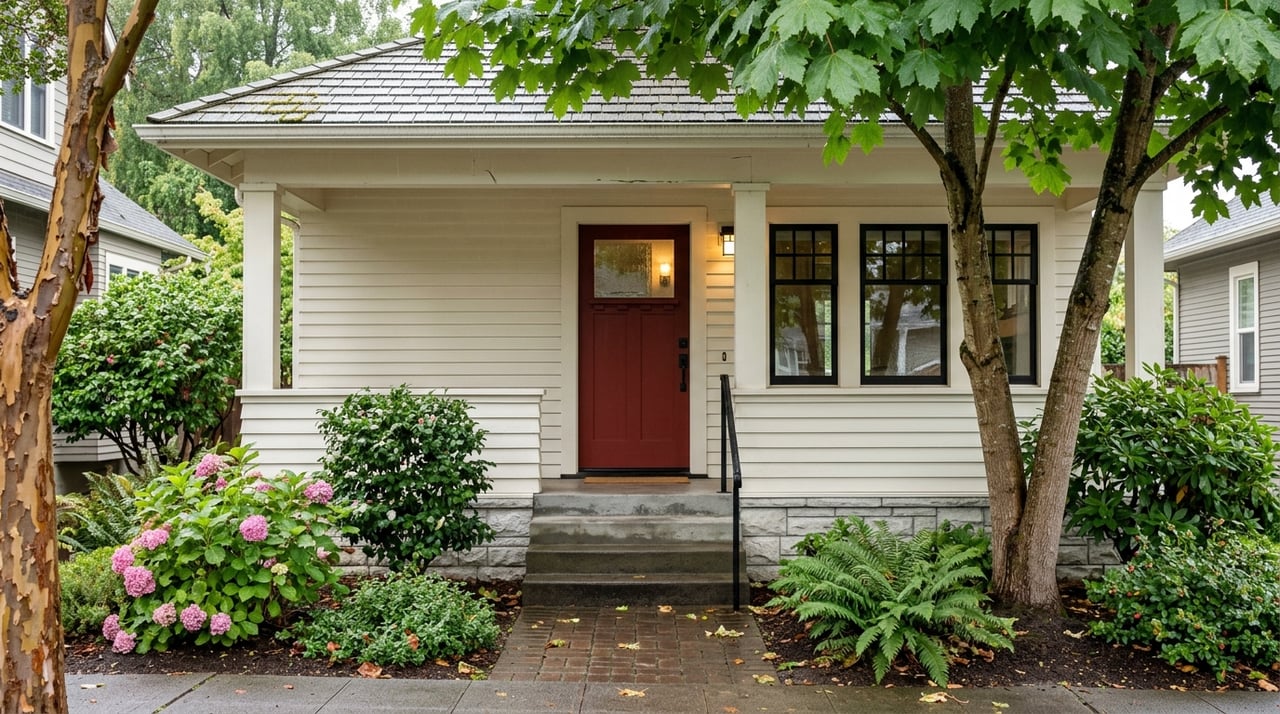
A townhome often appeals to buyers who want more space without moving all the way to a detached home. If you need more bedrooms, better storage, or a more house-like layout, a townhome can offer that middle ground.
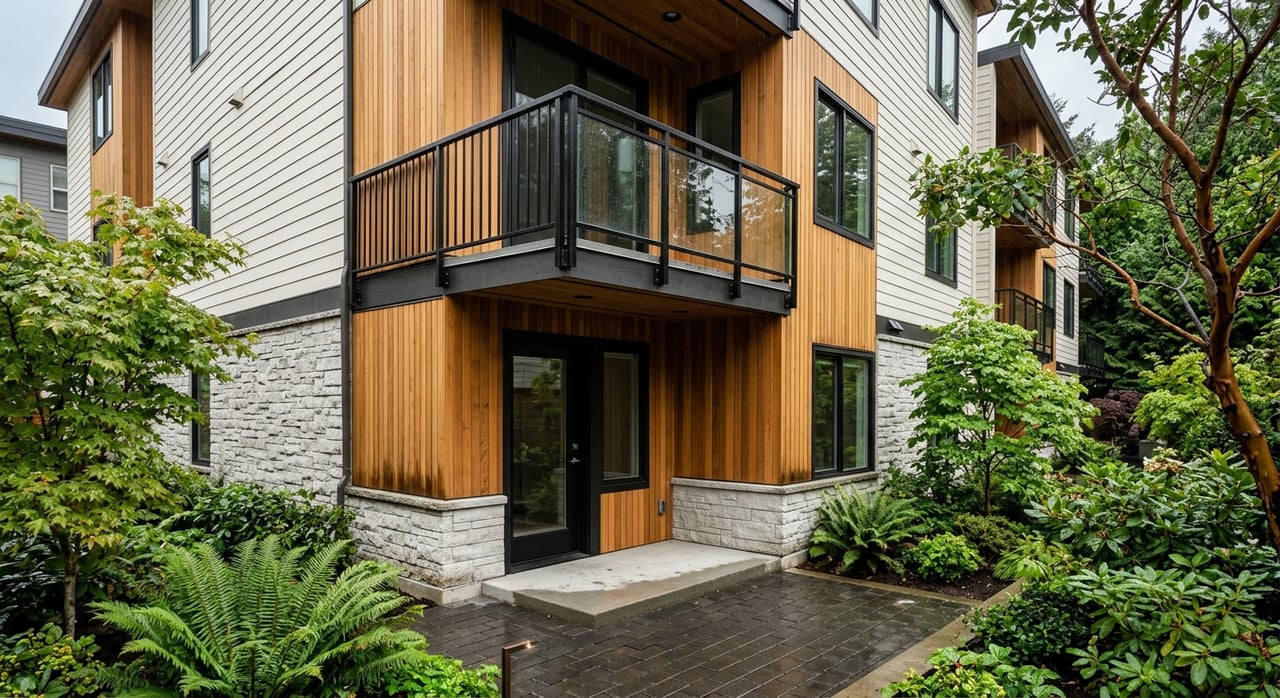
Townhomes also tend to suit buyers who want a little more separation between living areas and sleeping areas. Multi-level layouts can create a different feel from condo living, especially if you want more room for work, hobbies, or hosting.
In Langley, Willoughby stands out as one of the clearest townhouse-focused areas. The Willoughby Community Plan supports higher-density housing, mixed uses, pedestrian and bicycle links, civic uses, and multiple-family housing at townhouse and apartment densities.
That planning framework helps explain why so many buyers look to Willoughby when they want suburban convenience paired with newer townhome options. It is one of the places where the local housing mix clearly supports that lifestyle.
Townhome Examples by Lifestyle
A few local projects help show the range of townhome living in Langley:
- Gordon Square in Willoughby/Northeast Gordon is an example of a more residential-feeling collection of townhomes and duplexes within a growing area.
- Compass Cohousing in Langley includes a smaller mix of strata-titled homes, including townhouses and condos, and shows how some buyers may be drawn to a more community-oriented format.
- The Towers at Latimer Heights also includes city townhomes within a higher-density community setting.
If your top priorities are space, function, and a more house-like feel, a townhome may be worth the higher price point.
Strata Fees and Maintenance Are Not Simple
One of the biggest mistakes buyers make is assuming condos always mean higher fees and townhomes always mean lower maintenance. In British Columbia, both condos and many townhomes are strata housing, so the real question is how costs and responsibilities are divided.
BC guidance notes that strata fees fund operating expenses and the contingency reserve fund. These fees are typically approved through the annual budget and are often allocated by unit entitlement, usually based on habitable size in apartment-style condos and townhouse stratas.
That means your monthly fee is only part of the story. You also need to understand what the strata covers, how healthy the reserve fund is, and whether the corporation has a realistic plan for future repairs.
Why the Strata Structure Matters
Not all townhomes are structured the same way. A conventional townhouse strata may place some exterior and common-area responsibilities on the strata, while a bare land strata can shift more repair, maintenance, and insurance responsibility back to you as the owner.
This is important when you compare a condo to a townhome. A townhouse is not automatically the lower-maintenance option. You need to know whether it is a conventional strata or a bare land strata before you compare monthly fees or long-term ownership costs.
Why Depreciation Reports Matter
In BC, strata corporations with five or more lots must obtain depreciation reports on a five-year cycle. These reports are designed to identify long-term repair and replacement needs over a 30-year period.
They can help you spot whether a building or complex is planning ahead or simply deferring costs. BC also notes that contingency reserve fund spending, special levies, and fee increases are all tools a strata may use to fund future work.
For you as a buyer, that means the real cost of ownership is not just your mortgage payment and strata fee. It is also your exposure to future repairs and how well the strata is preparing for them.
Insurance Questions to Ask
Insurance is another area where condo and townhome ownership can differ in important ways. BC says strata corporation insurance does not cover your personal contents, living elsewhere after a loss, or the strata corporation’s deductible.
Owners are strongly advised to carry their own insurance policy. For bare land stratas, the owner is responsible for insurance, repair, and maintenance of the building on the lot.
That is why insurance should be part of your side-by-side comparison. Before you buy, ask what the strata insures, what you need to insure personally, and whether there are deductible risks you should budget for.
Closing Costs in Langley
If you are buying your first home, property transfer tax relief may help, but it may not erase the full cost. In BC, first-time buyers can currently receive up to $8,000 of property transfer tax relief on homes with a fair market value over $500,000 and up to $835,000, with the exemption phasing out completely at $860,000.
That matters because both condos and townhomes in Langley often fall within a range where some relief may apply. Still, resale buyers should not assume the tax disappears entirely.
Newly built principal residences have a separate exemption that can fully eliminate property transfer tax up to $1.1 million, with a phase-out to $1.15 million. In practical terms, that means the closing-cost picture can look very different for a resale home versus a qualifying new build.
For many buyers, the better question is not whether condos or townhomes are tax-free. It is whether the added monthly cost of a townhome feels worth it for the extra space and privacy you gain.
Where Demand May Stay Strong
It is smart to be careful about price-growth assumptions. In April 2026, both condo and townhome benchmark prices in Langley were lower year over year, and the wider Fraser Valley market remained buyer-favourable.
That is why it makes sense to focus less on trying to predict quick appreciation and more on the features that often support long-term demand. In Langley, those factors include transit access, walkability, product quality, and the overall health of the strata.
A reasonable local lens is this: condos near downtown Langley City may appeal to buyers drawn to future transit and convenience, while townhomes in planned areas such as Willoughby may appeal to buyers who want space and suburban function. Neither outcome guarantees stronger future price growth, but it helps explain why different parts of Langley attract different buyer profiles.
How to Choose the Right Fit
If you are still deciding, a simple framework can help. Start with your budget, then work outward to your lifestyle and risk tolerance.
A condo may be the better fit if you want:
- A lower entry price
- More transit-oriented or walkable living
- A smaller maintenance footprint
- A lock-and-leave lifestyle
- More choice in today’s active inventory
A townhome may be the better fit if you want:
- More bedrooms and storage
- A more house-like layout
- More separation of living space
- A middle ground between condo and detached living
- Flexibility for longer-term space needs
Before you make an offer on either one, review the details that affect your real monthly cost and future risk. In many cases, those details matter more than the marketing brochure.
What to Review Before You Buy
For any strata home in Langley, make time to review the key documents carefully. These records can tell you far more than the listing description.
Look closely at:
- The depreciation report
- The contingency reserve fund information
- The annual budget
- Strata bylaws and rules
- Insurance deductible details
- Special levy history
If you are comparing a condo and a townhome, this step is where the decision often becomes clearer. One property may look cheaper up front, but the documents can reveal a very different long-term cost picture.
The best choice in Langley is rarely condo versus townhome in the abstract. It is usually about matching your budget, maintenance comfort, and space needs to the right part of the market. If you want expert guidance comparing Langley condos and townhomes, connect with The Agency White Rock for a tailored market consultation.
FAQs
What is the price difference between a condo and townhome in Langley?
- In April 2026, Langley’s benchmark price was $554,100 for condos and $812,000 for townhomes, a gap of about $258,000.
What should Langley buyers review before buying a strata condo or townhome?
- You should review the depreciation report, contingency reserve fund information, annual budget, strata bylaws and rules, insurance deductible details, and any special levy history.
Are townhomes in Langley always lower maintenance than condos?
- No. Some townhomes are conventional stratas, while others are bare land stratas, and that can change who handles maintenance, repairs, and insurance.
Can first-time buyers get property transfer tax relief on Langley condos or townhomes?
- Yes. In BC, eligible first-time buyers can receive up to $8,000 of property transfer tax relief on homes over $500,000 and up to $835,000, with the exemption phasing out completely at $860,000.
Which Langley areas are often associated with condos versus townhomes?
- Condos are often tied to downtown Langley City and transit-oriented locations, while townhomes are especially common in planned suburban areas such as Willoughby.