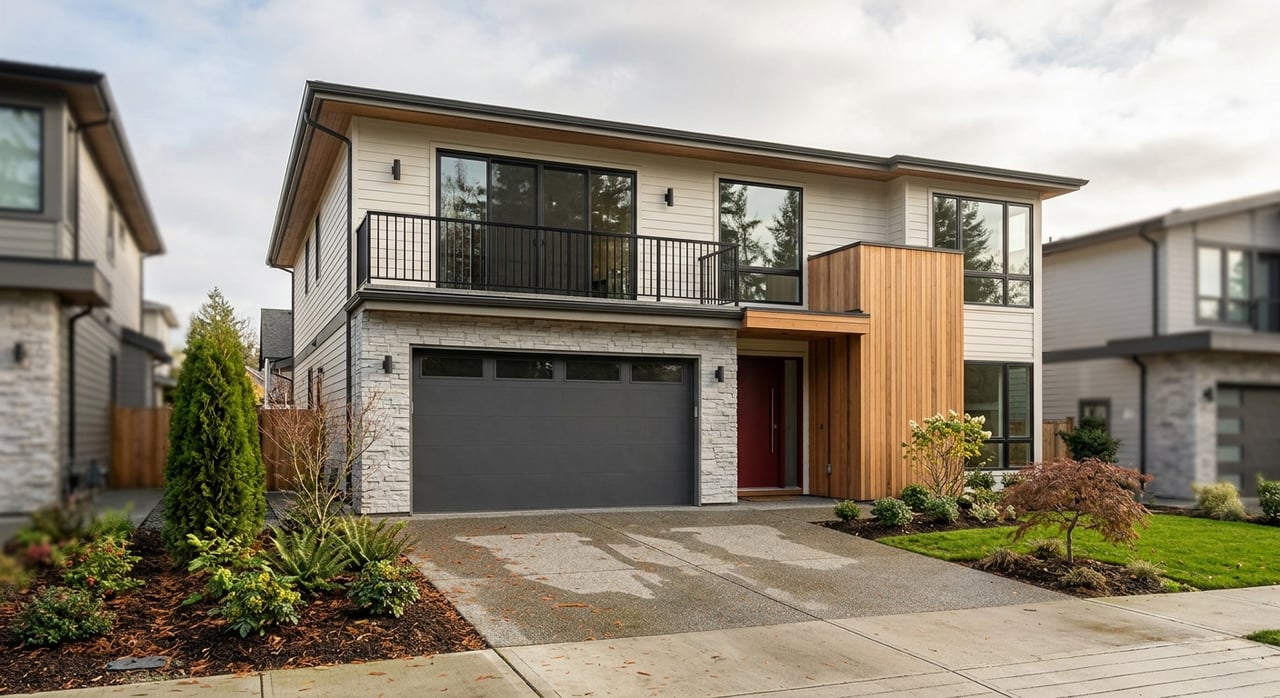
Ever wonder why some Chilliwack homes fly off the market while others sit for weeks? Inventory is a big reason. When you understand how much is for sale compared with how fast buyers are purchasing, you can time, price, and negotiate with confidence. In this guide, you’ll learn what months of inventory means, how to read it for Chilliwack, and the practical moves you can make as a buyer or seller. Let’s dive in.
What months of inventory means
Months of Inventory, or MOI, tells you how long it would take to sell all current listings at the recent sales pace. The formula is simple: MOI = Active listings divided by Average monthly sales. The absorption rate is the flip side: Monthly sales divided by Active listings. Absorption and MOI move in opposite directions.
Lower MOI means tighter supply and stronger seller leverage. Higher MOI means more selection and greater buyer leverage. Pair MOI with Days on Market to judge momentum and how fast well-priced homes are moving.
How to calculate MOI in Chilliwack
You only need two numbers: active listings and monthly sales for the same area and property type. Choose a time window for monthly sales:
- Last month for the most recent signal. It can be volatile.
- Three-month average for a balanced, near-term read.
- Twelve-month average for a smoother trend that reduces seasonality.
Focus your calculation on one property type at a time. Detached homes, townhomes, and condos behave differently in Chilliwack.
Example using hypothetical numbers
- Active listings for detached homes: 180 (example only).
- Monthly sales: 60 last month, or 55 using a three-month average (example only).
- MOI using last month: 180 divided by 60 = 3.0 months.
- Absorption using last month: 60 divided by 180 = 33.3 percent per month.
Label your numbers clearly if you are working with examples. Always pull the latest counts from local MLS and recent board reports before you act.
How to read the numbers
Use these practical ranges to frame your expectations. They are rule-of-thumb guides for most markets, including Chilliwack.
- MOI under 3 months: seller’s market. Shorter Days on Market and more competition.
- MOI 3 to 6 months: balanced market. Negotiation is more even.
- MOI above 6 months: buyer’s market. More selection and longer Days on Market.
MOI and Days on Market
- Seller’s market under 3 MOI often sees median DOM under 30 days.
- Balanced market of 3 to 6 MOI often sees median DOM around 30 to 60 days.
- Buyer’s market above 6 MOI often sees median DOM above 60 to 90 days.
Combine MOI with DOM trendlines. Rising MOI with rising DOM signals easing demand. Falling MOI with falling DOM signals firming demand.
What drives inventory in Chilliwack
Chilliwack’s property mix leans more toward detached homes and rural or acreage listings than Metro Vancouver. That can mean slower inventory turnover for some segments compared with high-density condo markets. New supply from building permits and completions also affects available listings.
Seasonality matters. Listings and buyer activity usually rise in spring and early summer, then cool into late fall and winter. Short-window MOI can overreact to seasonal swings, so always compare a near-term measure with a 12-month trend.
Demand in the Fraser Valley is influenced by relative affordability compared with Vancouver, Bank of Canada interest rate moves, and migration patterns. Remote and hybrid work and lifestyle preferences, such as larger yards, can support steady demand for Chilliwack detached homes.
For sellers: strategy by market type
Your pricing, timing, and negotiation plan should track MOI for your property type and neighborhood.
When MOI is low
- Pricing: Consider a confident price aligned with recent comparable sales and buyer demand. Overpricing can still slow activity.
- Timing: Spring exposure helps, but if inventory is tight, timing is less critical than presentation and pricing.
- Marketing: Lean into professional staging, photography, and video to maximize early interest.
- Negotiation: Expect firmer terms and a higher chance of multiple offers for well-priced homes.
When MOI is moderate to high
- Pricing: Price competitively from the start and prepare for potential price adjustments if traffic is slow.
- Preparation: Complete minor improvements, pre-listing touch-ups, and thorough staging to stand out.
- Flexibility: Be ready to offer small concessions on possession dates or inclusions when it helps a serious buyer commit.
- Timeline: Plan for a longer Days on Market and coordinate purchase plans accordingly.
For buyers: strategy by market type
MOI shapes how quickly you need to move and how much leverage you have during negotiations.
When MOI is low
- Readiness: Get a mortgage pre-approval and review key documents early so you can act fast.
- Offers: Shorter timelines and stronger terms can improve your odds. Balance speed with risk after consulting your agent.
- Search tactics: Consider homes with longer Days on Market or segments with more supply for greater negotiation room.
When MOI is moderate to high
- Leverage: You often have room to negotiate on price, closing dates, and repairs or credits.
- Patience: You can be selective and watch for price improvements or motivated sellers.
- Conditions: Keep standard inspection and financing conditions to protect your interests.
Property type matters
Do not average all property types together when you decide. Detached homes, townhomes, and condos can sit in different market phases at the same time. For example, detached could be balanced while townhomes lean seller-friendly due to tighter supply. Always calculate MOI within your specific segment for a true read.
Seasonality and timing
If you are selling, spring often brings more listings and buyers, which can increase competition and visibility. If MOI is already low, listing earlier can help you capture demand before competing inventory builds. If you are buying, late summer or late fall can sometimes offer more negotiation room, especially if MOI is drifting higher.
Seasonality is a guide, not a rule. Let current MOI, DOM trends, and your personal timeline shape the decision.
How to track MOI like a pro
- Pull a snapshot for your area and property type: active listings and last month’s sales.
- Add a second window: three-month or twelve-month average sales to smooth seasonality.
- Compare both. If last month diverges sharply from the longer trend, look for one-off events like a surge in listings or delayed closings.
- Pair with DOM and price trendlines for a fuller picture of momentum.
What to watch in the Fraser Valley
- Interest rates: Rate changes can quickly shift absorption by affecting affordability.
- New supply: Building permits, housing starts, and completions can change available inventory.
- Migration and lifestyle shifts: Moves within the Fraser Valley and from Metro Vancouver can support demand for Chilliwack family homes and lifestyle properties.
Put it into action
If you are pricing a sale, anchor your strategy to segment-level MOI, DOM, and recent comparable sales. If you are buying, align your search and negotiation plan to current absorption in your target neighborhoods and property types. A clear, data-led plan helps you move quickly and negotiate with confidence.
Ready to translate Chilliwack inventory into an advantage for your move or sale? Connect with the local team and global marketing platform that blends on-the-ground expertise with polished presentation. Start with a personalized market consultation from The Agency White Rock.
FAQs
What is months of inventory in real estate?
- Months of Inventory is the number of months it would take to sell all current listings at the recent sales pace. It equals active listings divided by average monthly sales.
How does MOI affect buyers in Chilliwack?
- Low MOI means faster sales and more competition, so you should be pre-approved and ready to move quickly. Higher MOI means more selection and stronger negotiating power.
How does MOI affect sellers in Chilliwack?
- Low MOI supports firmer pricing and fewer concessions if your home is well presented. Higher MOI calls for sharper pricing, standout marketing, and flexibility on terms.
What’s the difference between MOI and absorption?
- Absorption measures the share of inventory sold in a month. It equals monthly sales divided by active listings. It is the inverse of MOI.
Should I use last month or a 12-month average for MOI?
- Use both. Last month shows current momentum while a 12-month average smooths seasonality. Comparing them helps you spot true shifts versus noise.
Why should I calculate MOI by property type?
- Detached homes, townhomes, and condos can be in different market phases at the same time. Segment-level MOI gives you actionable insights for pricing and negotiation.
How do MOI and Days on Market work together?
- Lower MOI often aligns with shorter Days on Market and stronger seller leverage. Higher MOI typically aligns with longer Days on Market and more buyer leverage.